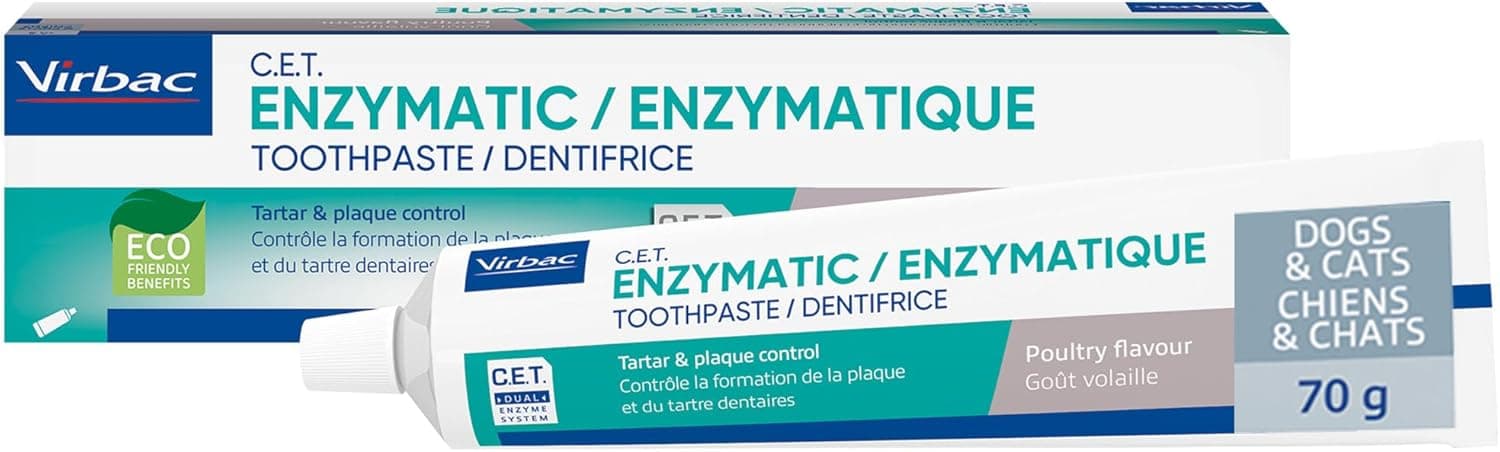
Virbac C.E.T.® Enzymatic Toothpaste| Tartar & Plaque Control for Fresh Breath | Pet Dental Care Toothpaste | Poultry Flavor, 2.5 oz
Virbac C.E.T. enzymatic toothpaste uses poultry flavor and dual-enzyme action to limit plaque and tartar while freshening breath without foaming agents unsafe for pets. The two-and-a-half-ounce tube fits beginner brushing routines. PawLix recommends it as a vet-trusted staple in home dental care.
- Dual enzymatic system helps reduce plaque biofilm
- Poultry flavor accepted by many picky dogs and some cats
- No foaming formula safe if small amounts are swallowed
- Two-and-a-half-ounce tube sized for trial and travel
- Pairs with finger brushes or pet toothbrushes
- Veterinary brand widely used in clinic recommendations
Why Enzymatic Paste Matters
Human toothpaste contains fluoride and detergents pets should not swallow. Enzymatic pet paste works even when mechanical brushing is imperfect, breaking down biofilm chemistry. Daily application beats weekly marathon scrubs.
Bad breath often signals periodontal disease needing professional cleaning—paste is maintenance, not a cure for loose teeth. Start with finger introduction before expecting full mouth cooperation.
PawLix notes cats may prefer poultry or fish lines—never force, reward calm acceptance.
Brushing Steps for Beginners
Let your pet lick a pea-sized amount first day. Lift lip gently, brush outer surfaces of canines and carnassials where tartar accumulates. Thirty seconds on each side is a win early on.
Use soft bristles, circular motions, and stop before struggle escalates. Pair with the same time daily after dinner walk.
Add water additives only if vet approves combining products.
Pros, Cons, and Kit Comparisons
Pros: palatable, enzymatic science, vet familiarity. Cons: small tube lasts quickly in large dogs, poultry scent not for every cat. Compare with Vet’s Best kits that include brushes, or Oxyfresh water additive for drinker-friendly households.
Dental chews supplement but do not replace brushing. Annual vet dental radiographs still matter.
If bleeding gums appear, pause and schedule exam—do not scrub harder.
Storage and Safety
Cap tightly; store cool. Do not share tubes between species if one pet has oral infection. Wash hands after brushing.
Keep away from children who mistake flavor for food. Check expiration on reorder.
Discard if separation or odor changes drastically.
PawLix Dental Plan
Buy two tubes if you brush two pets. Calendar vet cleanings alongside home care. Photograph teeth monthly to spot yellowing early.
Bundle with a soft brush sized to mouth. PawLix favors Virbac for owners graduating from wipes to true brushing.
Track acceptance in a notes app—flavor preference guides rebuys.
What Owners Ask About Virbac CET Poultry
Owners ask why poultry flavor matters. Dogs accept savory paste more than mint human tubes, which can contain xylitol toxic to pets. Poultry CET is swallowed-safe per veterinary dental lines—still, train small amounts on a finger brush before expecting full mouth cooperation.
How often to brush is the next question. Daily is ideal; three times weekly beats never. Enzymes work best with contact time on teeth, not a single swipe. Pair with a soft pet toothbrush, not stiff human ones that gouge gums.
Cats occasionally get dog paste by mistake in multi-pet homes—ask your vet about feline-specific options if you share supplies. Never use human whitening pastes on pets.
People wonder if paste replaces professional cleanings. No home routine removes tartar below the gumline once formed. Paste slows accumulation when started young; senior dogs may still need anesthetic dentals—budget accordingly and discuss heart labs with your clinic.
In-depth guide · 540 words
More Pet Picks
Explore related products from our catalog.