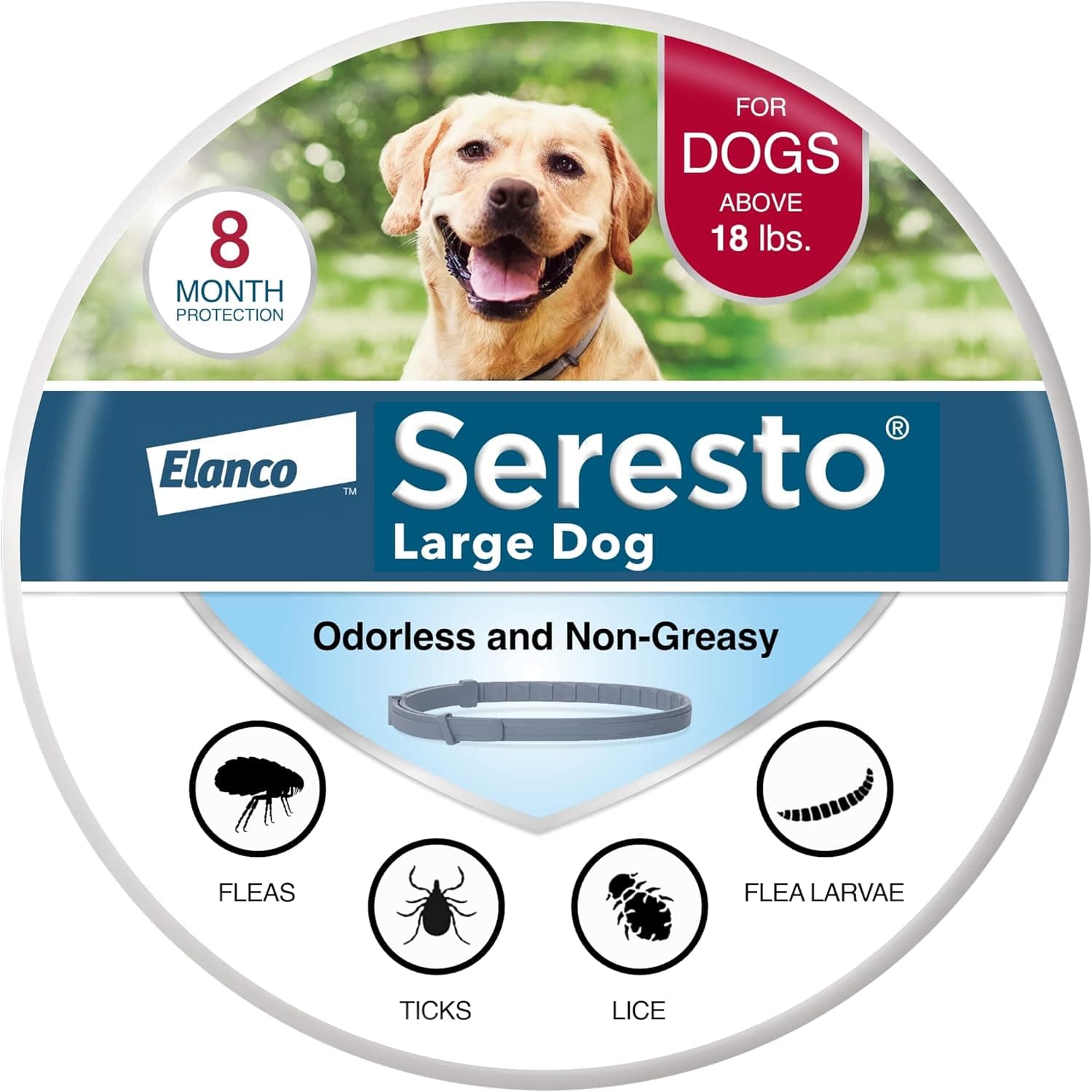
Seresto Flea & Tick Collar For Dogs Over 18 lbs., Treatment & Prevention, Vet-Recommend, 8 Month Protection
The Seresto collar delivers eight months of continuous flea and tick prevention for dogs over eighteen pounds without monthly pills or topical mess. Veterinarians often recommend it for owners who forget dosing schedules. PawLix highlights this collar for outdoor adventurers who need steady protection through hiking season.
- Up to eight months of flea and tick prevention in one collar
- Designed for dogs over 18 lbs with adjustable fit
- No greasy topical application or pill scheduling
- Slow release technology spreads active ingredients across the coat
- Water-resistant for normal bathing and swimming routines
- Vet-recommended option for prevention-focused households
Who Should Consider Seresto
Owners of medium and large dogs who spend time in tick-heavy yards, campsites, or wooded trails benefit from always-on prevention. If you have struggled to remember monthly chews, a collar that works while your dog sleeps can simplify life. Households with children may prefer avoiding topical oils on the dog’s back that transfer during cuddling, though you should still supervise collar handling.
This SKU is sized for dogs over eighteen pounds; do not use on puppies below label weight without veterinary guidance. Dogs with skin lesions, collar sensitivity, or neurologic conditions need a pre-purchase exam. Multi-pet homes should ensure cats do not chew dog collars, as species formulations differ.
Seresto is prevention, not a treatment for active home infestations alone. If you see fleas indoors, combine environmental cleaning with your veterinarian’s plan. PawLix shoppers comparing oral isoxazolines should discuss seizure risk history and lifestyle with their clinic.
Fit, Application, and Monitoring
Remove the collar from packaging, stretch gently to activate, and fit two fingers between collar and neck. Trim excess length per instructions, leaving space for growth in young adults. Watch the first forty-eight hours for redness, scratching, or lethargy. Record the start date on your calendar so you replace at eight months, not when it looks worn.
Bathing and swimming are generally acceptable, but excessive shampooing may reduce efficacy—rinse gently and avoid harsh detergents on the neck area. If you use another topical product, ask your vet before layering. Store unused collars in original packaging away from heat.
Check weekly that the collar is not embedded in skin as puppies grow. Groom long-haired necks so contact stays consistent. Photograph the fit for dog sitters and note batch numbers in case of product questions.
Pros, Cons, and Alternatives
Pros include long duration, no oral dosing, and strong convenience for busy families. Cons include higher upfront cost, the need to monitor skin reactions, and debates some owners read about active ingredients—discuss concerns openly with your veterinarian rather than social media alone. Alternatives include monthly oral preventives, topical vials, and tick-repellent sprays for same-day hikes.
Compared with knockoff collars, buy from trusted retailers listed on PawLix to avoid counterfeit products. Compared with prescription-only orals, collars may suit dogs that vomit pills. Effectiveness varies by region and parasite pressure; heavy tick areas may still need environmental control.
If you see ticks attached despite use, report to your vet—no product is one hundred percent in all conditions. Rotate pasture mowing, treat yards responsibly, and inspect paws after walks.
Safety and Household Notes
Keep packaging and desiccant away from pets and children. Wash hands after handling a new collar. If chewing occurs, remove immediately and call your clinic. Do not combine with other pesticides unless directed. Monitor senior dogs for skin thinning under collars.
Document any adverse events with lot numbers. Travelers should verify collar regulations if crossing borders with medicated products. Boarding facilities may require written parasite plans—bring your receipt and fit photo.
Dispose of expired collars per local hazardous waste guidance if required. Never share collars between dogs due to sizing and activation differences.
PawLix Buying Perspective
Divide the collar cost across eight months to compare with monthly chew pricing. Pair with a fine-tooth comb for post-hike checks. Schedule annual wellness labs even when prevention seems invisible.
Ask your vet about Lyme and heartworm needs in your ZIP code—collars may not cover all vectors. Update PawLix wishlists before summer tick surges.
Replace on calendar, not memory, and photograph neck checks monthly for peace of mind.
In-depth guide · 682 words
More Pet Picks
Explore related products from our catalog.