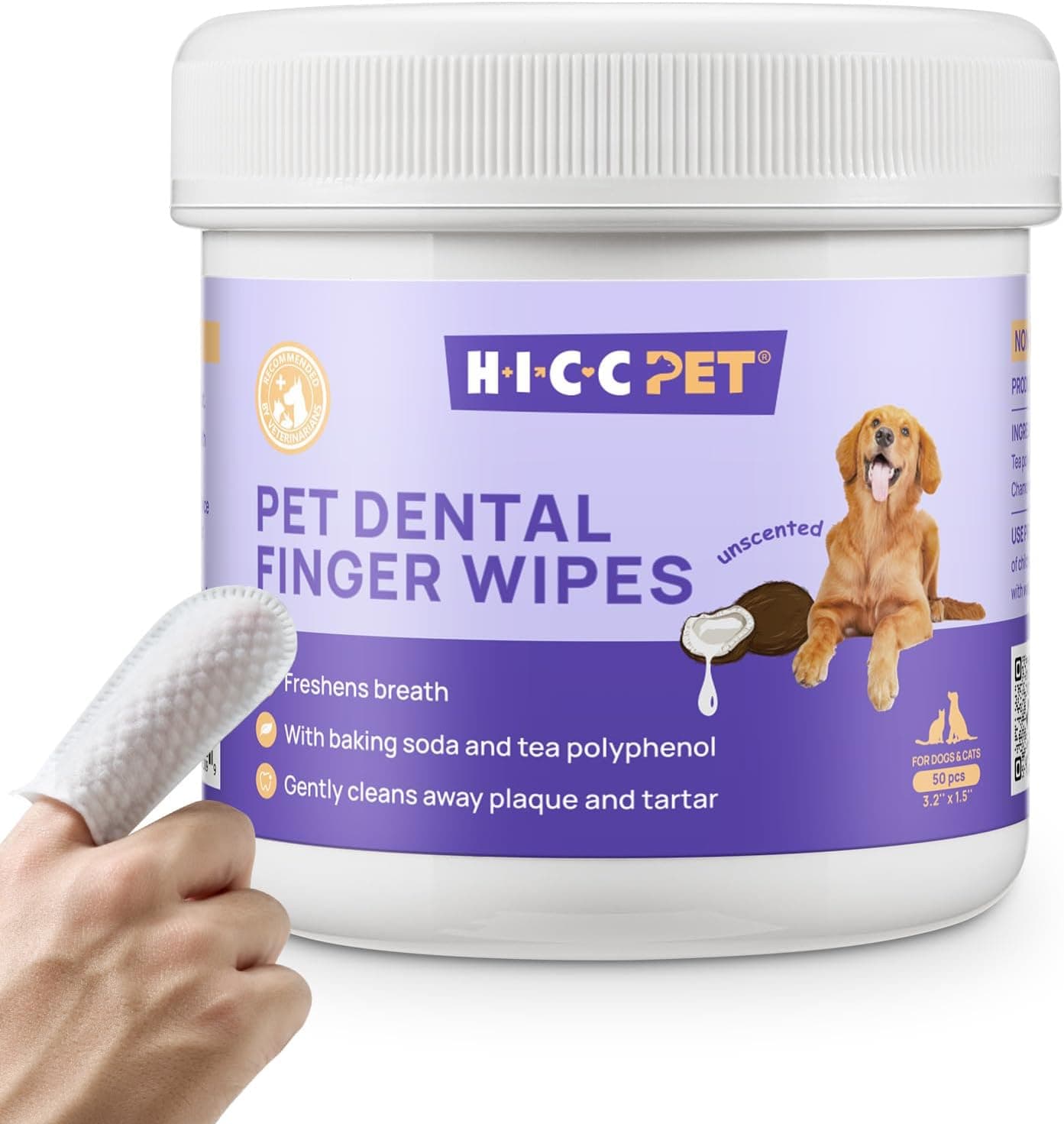
HICC Pet Teeth Cleaning Wipes for Dogs & Cats, Vet-Recommended Remove Bad Breath & Plaque & Tartar Buildup, Dog Tooth Brushing Kit, Dog Breath Freshener, Dogs Toothbrush & Toothpaste Alternatives
HICC Pet teeth cleaning wipes offer a brush-free path to daily oral care for dogs and cats that resist traditional toothbrushes, with a vet-recommended formula targeting bad breath, plaque, and tartar buildup. Each textured wipe wraps around a finger for controlled surface contact on teeth and gums. PawLix recommends these for pet owners who want to establish an oral hygiene habit before graduating to brushing.
- Finger wipe design for brush-free teeth cleaning
- Vet-recommended formula targets plaque, tartar, and bad breath
- Safe for both dogs and cats per label guidelines
- Textured surface creates mechanical cleaning action on enamel
- Convenient starting point before introducing a toothbrush
- No rinsing required for daily use compatibility
The Case for Wipe-Based Oral Care
Many pets tolerate finger contact in the mouth more readily than a brush handle approaching their face. Wipes allow gradual desensitization: start by letting your pet lick the wipe, then progress to gentle rubbing on outer tooth surfaces. The textured wipe surface creates mild mechanical action that loosens soft plaque before it mineralizes into calculus.
Cats are notoriously resistant to oral care tools. Finger wipes that mimic a gentle rub during grooming handling are sometimes accepted where rigid brushes fail. PawLix notes that consistency matters more than tool choice—a wipe used daily outperforms a brush used once per week.
These wipes are positioned as a toothbrush and toothpaste alternative, not a supplement layered on top of brushing. If your pet already tolerates brushing with enzymatic paste, continue that routine. Wipes suit the gap between no oral care and full brushing acceptance.
How to Use Effectively
Wrap the wipe snugly around your index finger, exposing the textured surface. Lift the lip on one side, apply gentle circular pressure on the outer surface of upper and lower molars and canines where tartar first accumulates. Thirty seconds per side done consistently is more valuable than an occasional thorough scrub.
Begin at the front canines where your pet is most tolerant and gradually work toward the back molars over days or weeks. Never force the wipe into a resistant mouth; end sessions before your pet becomes anxious so the next session starts from a calm baseline. Reward immediately after each successful session with a treat or play.
Daily use is ideal. If that is not realistic, three times per week still provides meaningful benefit over no routine. Track breath quality as an informal progress indicator—improvement should be noticeable within two to three weeks of consistent use.
Pros, Cons, and Dental Chew Comparisons
Wipes provide direct mechanical and chemical contact with tooth surfaces in a way that passive treats and water additives cannot replicate. The vet-recommended positioning reflects the VOHC (Veterinary Oral Health Council) emphasis on daily contact for meaningful plaque reduction. No rinsing required simplifies the routine significantly for multi-pet households.
Drawbacks include the inability to access subgingival surfaces that brushing with the correct angle can partially reach, and the higher ongoing cost per day compared with a toothbrush and paste once a brush is accepted. Long-term, transitioning to brushing provides better gum margin cleaning.
Compared with Virbac CET Veggiedent dental chews that provide mechanical chewing action from the outside, wipes provide owner-controlled contact on specific surfaces. PawLix recommends combining wipes for front teeth with chews that address molars through natural gnawing motion.
Safety and Storage
Wipe formulas for pets use safe ingredients for incidental swallowing during the cleaning process. However, avoid using human dental wipes or flossing products that may contain xylitol or chlorhexidine at concentrations not approved for pets. Check the ingredient list specifically for xylitol before use.
Store wipes sealed at room temperature. If wipes dry out, they lose the moisture needed for the formula to activate on contact. Discard the pack if wipes smell unusual compared with a freshly opened container.
If gums bleed during wiping, reduce pressure and consult your veterinarian—bleeding gums indicate periodontal disease that needs professional evaluation, not more aggressive home care.
PawLix Dental Strategy
Buy wipes as a starting point if your pet has never had teeth cleaned at home. After four to six weeks of daily wipe tolerance, introduce a soft finger brush with enzymatic paste as the next progression. Track the transition with a simple calendar note.
Schedule professional dental cleanings regardless of home care frequency. Wipes reduce accumulation between cleanings but cannot remove calculus that has already mineralized. Annual dental exams with radiographs catch subgingival disease invisible to home observation.
PawLix positions HICC Pet wipes as the entry point in an oral care progression for resistant pets and as an accessible gift for new puppy and kitten owners establishing healthy routines from day one.
In-depth guide · 768 words
More Pet Picks
Explore related products from our catalog.