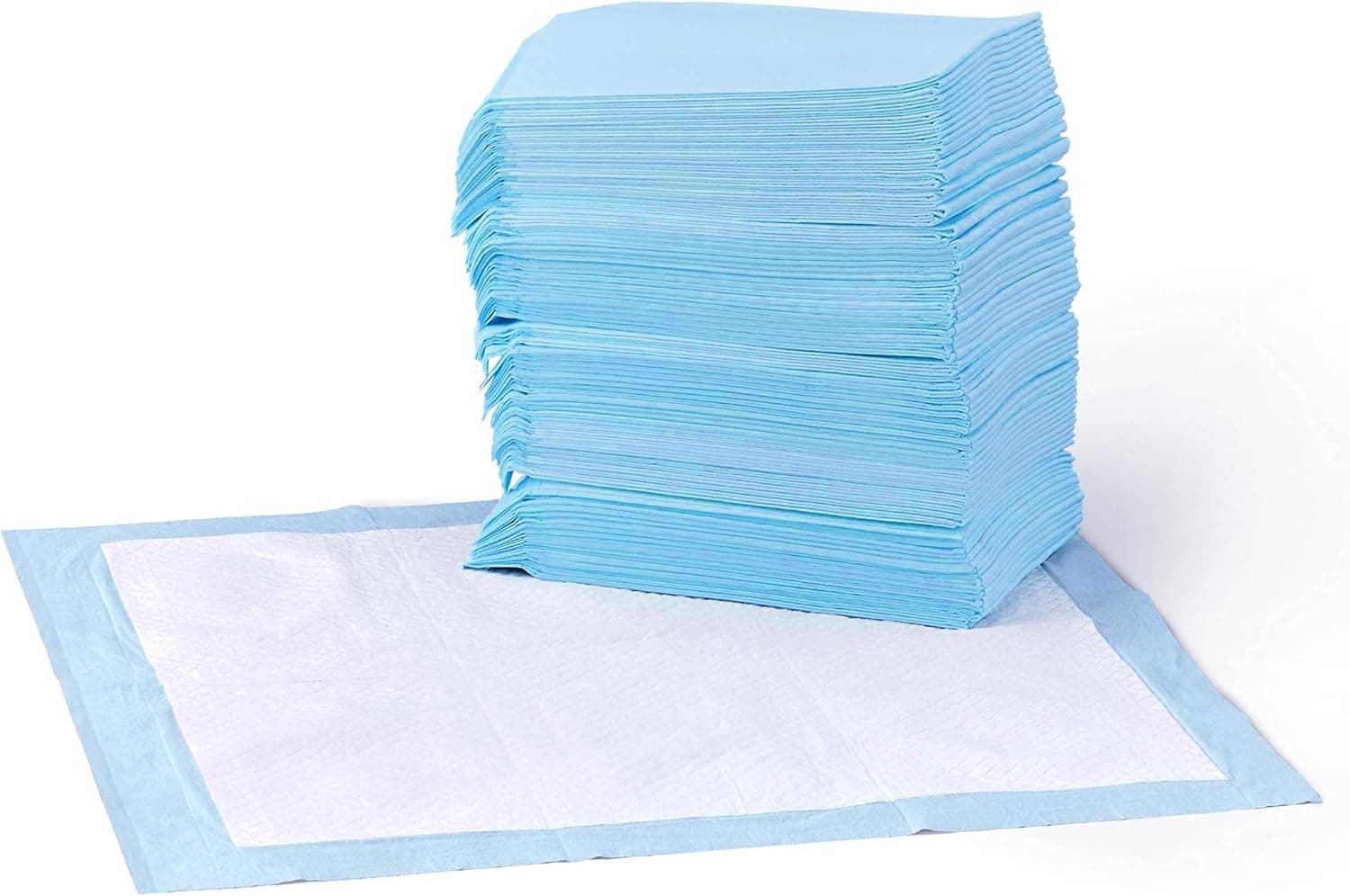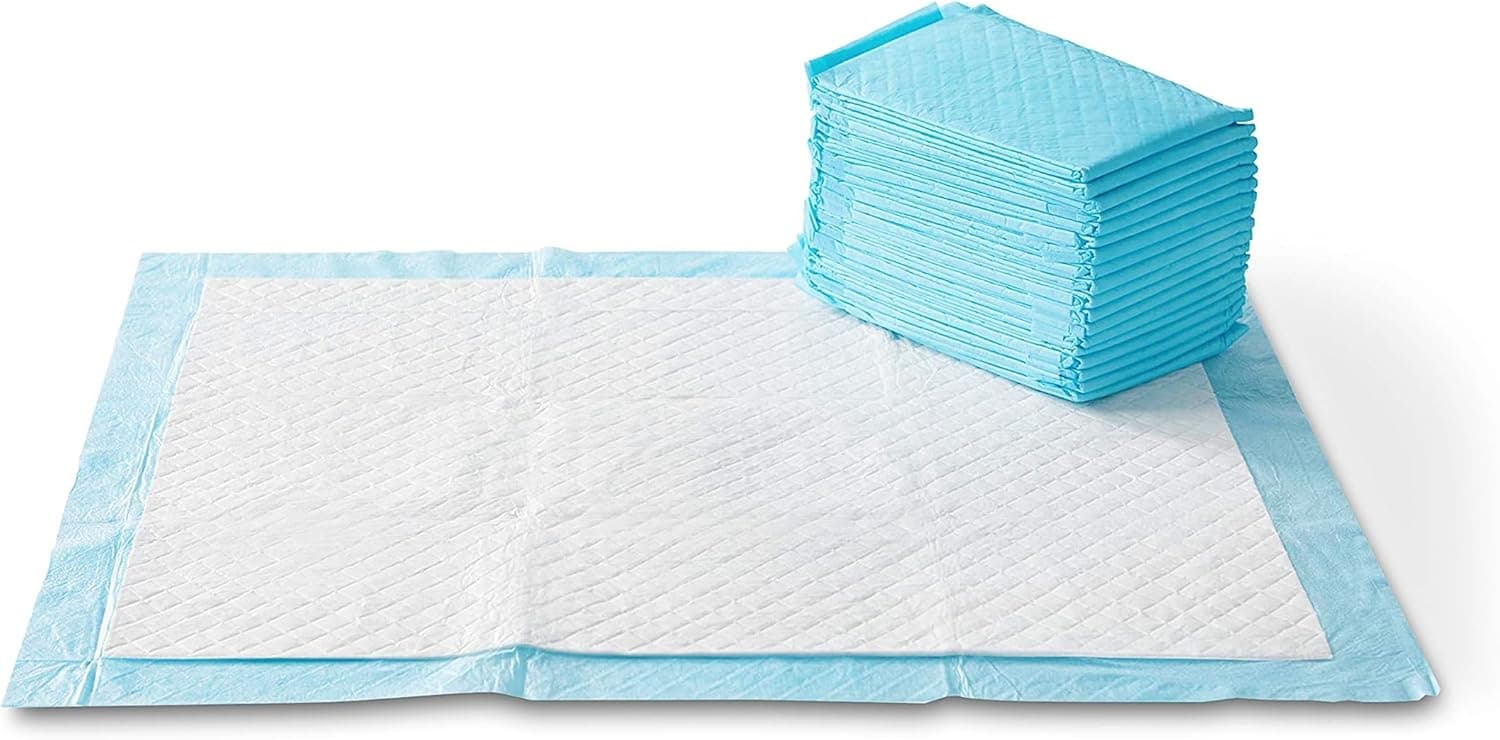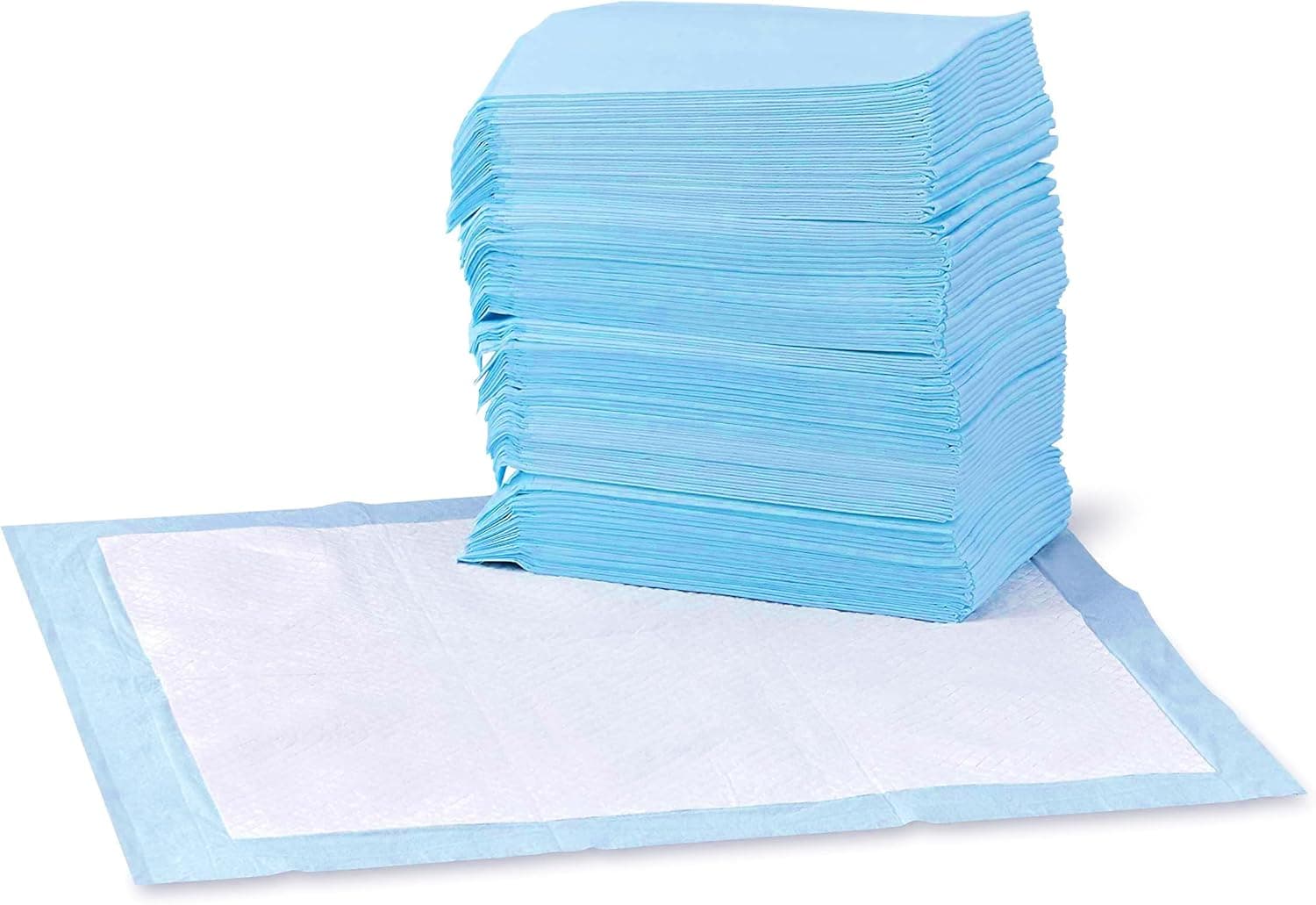
Amazon Basics Leak-Proof Dog and Puppy Potty Training Pee Pads with Quick-Dry 5-Layer Super Absorbent Design, Regular Size 22 x 22 inch, Blue & White, 100 Count
Amazon Basics one-hundred-count training pads give you twice the supply of the standard fifty-count pack at the same dependable five-layer construction and twenty-two-inch square size. The larger pack suits multi-puppy households, fosters, and training programs that go through pads quickly. PawLix recommends stocking this size when housebreaking is in full swing and daily rotation demands reliable backup.
- One hundred pads for extended training periods without reordering
- Five-layer absorbent core with quick-dry surface
- Leak-proof backing protects hardwood, tile, and area rugs
- Regular 22×22 inch size fits crates, exercise pens, and corners
- Blue and white top sheet makes saturation easy to spot
- Works for puppies, senior dogs, post-surgical care, and indoor cats
Who Benefits From the 100-Count Pack
Foster homes rotating multiple puppies, breeders handling litters, and apartment dwellers without yard access burn through training pads faster than casual owners expect. The one-hundred-count format reduces how often you place orders during the most demanding training weeks. Households with small or toy breeds that use pads permanently throughout life also benefit from the bulk supply.
Senior dogs regaining confidence after surgery or experiencing incontinence need fresh pads changed throughout the day. Having a large reserve means caregivers swap immediately without rationing pads near the end of a small pack. PawLix recommends pairing this size with a pad holder tray to keep corners flat on slick floors.
The regular twenty-two-inch size is appropriate for small to medium dogs. Large breeds covering more surface area may need overlapping pads or a separate extra-large format. Consistent placement in one designated zone helps dogs build habits faster than moving pads room to room.
Training Setup and Technique
Place pads plastic-side down on a hard flat surface in a confined training zone. Introduce puppies to the pad after meals, naps, and active play by leading them directly to the spot with a consistent cue word. Reward immediately after success with a calm treat and verbal praise rather than excited celebration that may distract from the act.
Replace pads as soon as they feel saturated, as dogs often avoid damp surfaces and seek the nearest clean spot—usually the rug. In multi-dog homes, use enough pads that competition for one spot does not drive accidents elsewhere. Enzyme cleaner on any off-pad mistakes prevents residual scent from attracting repeat marking.
For owners working toward outdoor training, gradually move the pad inch by inch toward the door over days or weeks. Some dogs transition smoothly; others need longer indoor phases. The one-hundred-count supply supports the full transition period without running short midway.
Pros, Cons, and Comparisons
The main advantages are volume value, reliable absorbency at the price point, and the familiar Amazon Basics consistency that makes reordering predictable. The five-layer core performs comparably to the standard fifty-count version. Dogs that shred pads when bored or anxious may waste supplies regardless of pack size; address the behavioral root with enrichment before buying bulk.
Compared with the fifty-count pack, the per-pad cost drops and shipping frequency drops further. Compared with premium brands that add pheromone attractants or charcoal odor layers, Amazon Basics focuses on core leak protection without specialty features. If your dog is slow to use pads voluntarily, an attractant-scented option may accelerate the habit.
Washable fabric pads reduce long-term waste and cost but require laundry after each use. Disposable pads win on convenience during active training phases; fabric pads suit maintenance phases once habits are established. PawLix shoppers comparing COCOYO or Glad charcoal pads should weigh attractant features and odor control layers against the straightforward value here.
Storage, Safety, and Disposal
Store unopened packs in a dry closet away from humidity that can weaken adhesive backing and from puppies that may chew packaging. Open packs are best kept in a sealed bin or original bag rolled shut. Dispose of used pads in tied bags, particularly in shared trash areas where wildlife or other pets might investigate.
Never flush pads; the backing film can block plumbing and wastewater systems. Wash hands after handling heavily soiled pads. If urine leaks through despite correct orientation, check whether the pad is saturated beyond capacity, placed on an uneven floor, or damaged before concluding it is a product failure.
Dogs with sudden urinary frequency increases warrant a veterinary visit, as UTIs and metabolic conditions can change output volume dramatically. Pads make accidents manageable during illness recovery but are not a substitute for diagnosis.
PawLix Buying Notes
Count expected daily changes—typical puppies need three to six per day in early training—and multiply by desired stock weeks to judge whether one hundred is enough or two packs make sense. Bundle with enzymatic cleaner and treats for a complete training station setup.
Photograph the pad layout on day one so dog sitters and family members replicate the same zone exactly. Consistency of location matters more than pad brand during the habit-formation window.
PawLix lists this one-hundred-count SKU for intensive training phases and high-rotation households that want a dependable supply without frequent reorders.
In-depth guide · 822 words
More Pet Picks
Explore related products from our catalog.